
Start a Loma Linda Residents Directory Search
A useful Loma Linda residents directory search begins with the clue already in hand. A name points toward court, voter, license, business, or archival records. An address points first to the county parcel roll and the city GIS layer. An older household may be easier to find in a directory, census schedule, obituary, or university collection than in a current index. These records answer different questions, so the strongest result is a trail of matching details rather than a single hit.
Property records usually describe an owner or a tax mailing destination. They do not make a complete household list. Voter data is more closely tied to registration, but California restricts public voter-file use and the county's online gateway is designed for a person's own lookup. Court and vital records add identity and relationship clues, while business and license filings show an affiliation. A careful search keeps those roles separate.
- Write down the known name, spelling variants, address, date range, institution, and reason for the search before opening a portal.
- Use ARC Parcel Access to connect an address or owner name to an APN and compare situs with mailing information.
- Use the APN, legal description, and party names to move into the recorder's index; it is not searchable by street address.
- Use CAP, vital-record procedures, business filings, licenses, or the county's voter channels only for the question each source is allowed to answer.
- For older people and places, pair the LLU collections and released census material with deeds, obituaries, probate, or a focused records request.
That order prevents a common error: treating a name on a deed, a case caption, or a filing as proof of present residence. The link between sources matters more than the number of results.
Loma Linda Residents Directory: Where Resident Records Live
Loma Linda is an incorporated city, but the core people-related records are layered across city, county, state, court, and university custodians. The San Bernardino County Assessor-Recorder-Clerk connects parcels, recorded instruments, and county vital certificates. The Registrar of Voters manages a self-lookup and purpose-restricted voter products. City Hall holds council and planning material, not the county deed roll. The Superior Court holds case files, and Loma Linda University holds a uniquely local historical record of the institutional community.
San Bernardino County ARC
222 W. Hospitality Lane
San Bernardino, CA 92415
Assessor 909-387-8307
Recorder-Clerk 909-387-8306
San Bernardino Registrar of Voters
777 E. Rialto Avenue
San Bernardino, CA 92415-0770
909-387-8300
ARC's Hall of Records is the practical starting point for parcel, deed, certificate, and copy questions. The City Clerk routes council, ordinance, planning-hearing, and other municipal records. For a city record that is not posted, a focused California Public Records Act request should identify the department, address or subject, and date range. A custodian can search an existing record; it does not have to create a new resident list.
Loma Linda Residents Directory: Parcel Search Fields
The assessor portal supplies the main bridge from a Loma Linda address to a record trail. It supports a whole-street approach as well as a single parcel. The search fields change with the selected mode, so a researcher does not enter every field at once. Result tabs separate current property information from roll history, parcel history, owner history, land, single-family-residence, and other-characteristic data.
| Search field | How it works |
|---|---|
| Parcel Number | Enter the APN in the parcel-number route. |
| Address | Use address autocomplete with street number and name. |
| Street Number | Numeric component for address searches. |
| Street Name Only | Useful for a whole-street pass. |
| City and State | Use Loma Linda and CA to narrow the place. |
| Zip Code | Supports a postal-area parcel filter, not a city-limit test. |
| First Name / Last Name | Owner-name utility with Active or Inactive name choices. |
| Formatted / Unformatted Name | Alternate name-index handling. |
ARC's parcel information is an assessment tool, not a title opinion. Save the APN, legal-description fragments, and the date of access. That stable key can then be compared with the GIS polygon and used to narrow a recorder search.
Loma Linda Residents Directory: Current Resident Rolls
Several Loma Linda sources look directory-like, but each records a different relationship. The table below keeps those relationships visible. A name in an owner-derived field is a property connection. A voter result belongs to the registered voter and the lawful access route. A court caption identifies a party to a proceeding, not necessarily a current resident.
| Source | What It Can Show | Keeper | Access |
|---|---|---|---|
| Parcel and assessment roll | APN, situs, mailing clue, values, characteristics | San Bernardino County ARC | Free web search and map |
| Recorded-document index | Grantor, grantee, document title and date | ARC Recorder | Free index; copy or office view |
| Voter self-lookup | Own registration status, districts, ballot tools | Registrar of Voters | Authenticated self-service |
| Court case search | Party role, case chronology, disposition clues | Superior Court CAP | Online metadata; limits apply |
| City and institutional directories | Officials, staff, historical contacts, affiliations | City Hall or LLU archives | Public pages or archive rules |
When the question shifts from a broad residents directory search to one person, use the Loma Linda resident lookup workflow. It treats a property name, a court party, a business agent, and a historical directory entry as leads that need independent support.
Loma Linda Residents Directory: The Recorder Trail
The San Bernardino County recorder index reaches from 1925 to the present according to its main public description. Its useful fields are document number, document date, document title, grantor, and grantee. A grantor transfers an interest; a grantee receives one. Deeds, deeds of trust, reconveyances, liens, and related filings can create a name-and-property trail, but the web index is not an image library.
ARC says it cannot locate ownership by street address. First obtain the current parcel number and owner-derived name from Parcel Access. Then search the party name, narrow by recording date or title, and record the document number. Copies can be ordered or viewed through the county's established channels. The image limitation matters: an index hit may confirm that a document exists without showing the legal description, signatures, or full terms online.
For older research, preserve the county's two official descriptions. The general index says 1925-present, while the property-research guide describes online or office chain work from 1958-present and pre-1958 microfilm by decade. Ask ARC which route applies before promising a remote result for the 1925-1957 period.
Loma Linda Residents Directory: Court Names Need Context
The Superior Court of California, County of San Bernardino, Court Access Portal is a name-and-case source, not a directory of residents. Search modes include case number, party or business name, first, middle, and last name, case type, filing-date range, calendar, and the Search/Clear controls after the terms are accepted. A narrow date range and a case category can reduce false matches.
The San Bernardino Court Access Portal is the official starting point for the county case search.  The linked capture places the court interface beside the fields and result limits described below.
| CAP result field | What to read |
|---|---|
| Case number and title | Stable placement and the named proceeding. |
| Filing date, type, and status | When the matter began and its current posture. |
| Party names and roles | Whether a person is plaintiff, defendant, petitioner, respondent, or another role. |
| Hearings and register of actions | Chronology, orders, and later events. |
| Document links | Availability and any copy or fee step. |
CAP warns that data can be incomplete or affected by conversion errors. Juvenile, adoption, sealed, confidential-family, victim, and expunged matters may be absent. Criminal and traffic information before 1998 is limited. A complaint states an allegation; a disposition or later order carries a different meaning. For an older file, the district clerk, Document Control, or a written request may be needed, and off-site retrieval can take up to a week.
Loma Linda Residents Directory: Vital Events in Local Records
Birth, death, marriage, and divorce records follow specialized rules rather than the general public-record request path. San Bernardino County ARC handles births and deaths occurring in the county and marriages licensed there. California Department of Public Health Vital Records supplies statewide forms and records for the events and copy classes within its authority.
| Record | Custodian route | Key access point |
|---|---|---|
| Birth or death | ARC or CDPH-VR | Informational copy may differ from authorized copy |
| Public marriage | ARC for a known county license; CDPH statewide | Copy class and relationship matter |
| Confidential marriage | County that issued the license | Party or court order under Family Code §511 |
| Divorce | Superior Court file or decree | CDPH certificate is not the operative decree |
The county's inspected fees were $34 for a birth certificate, $26 for death, and $19 for marriage, with a card surcharge and mailing charges listed for July 1, 2026. Verify current amounts before sending money. Authorized mailed requests require notarization and a qualifying relationship or authority; informational copies carry a warning that they cannot establish identity. A genealogy index, obituary, cemetery entry, or church record can point toward an event, but it is not the certificate.
Loma Linda Residents Directory: Why the Voter Gateway Is Private
My Elections Gateway is built for a person's own registration lookup. It asks for first name when needed, last name, the numeric part of the residence address, date of birth, a CAPTCHA, and the SIGN IN button. A successful account can return registration status, districts, voting guides, polling or drop-off information, ballot status, election results, officials, and campaign-finance material. Voting history was not available in the gateway when inspected.
California Elections Code §§2188 and 2194 limit voter-file products to approved election, political, scholarly, journalistic, or governmental purposes and defined candidate or committee use. The signed county application asks for the applicant, organization, contact details, residence or business address, intended use, and wet signature. It offers county, district, or precinct lists, party filters, selected election history, walking lists, labels, and custom reports or maps. Approval is stated as three to five business days, with delivery choices that include office pickup, mail, thumb drive, and email/PDF.
This is why a California voter roll cannot be presented as an open Loma Linda street browser. A voter may request a certified copy of their own record with government photo ID, but the county will not use that channel to disclose another person's confidential application.
Loma Linda Residents Directory: Historical Resident Directories
The most local historical directory lead is at Loma Linda University. The Heritage Research Center's archival inventory names Loma Linda Sanitarium and Hospital telephone directories from 1924 through 1930. The same institution's Seventh-day Adventist Document File lists a 1929 “Loma Linda Citizen Directory by localities” record. These are not generic phone-book clues. They reflect a health-care, school, and church community whose names may be missing from a conventional city heading.
The university collection includes photographs, papers, catalogs, newsletters, oral histories, and institutional records. The Heritage Research Center describes research access, while its digital archive holds described and digitized photographs and other media. A printed directory year can place a person, spouse, department, or address at a moment in time. It cannot establish a present household without a current custodian record.
The city-directory collections have their own full treatment on the Loma Linda city directory collections page.  This linked city-record view provides a current civic contrast to the older university shelf.
The 1924-1930 telephone run is a verified collection-level record, but the public inventory does not expose a scanned entry. The 1929 citizen-directory record is likewise a catalog lead without a public page image. Ask the archivist which items can be viewed and whether a reproduction or appointment is allowed. Do not turn a collection description into a claim about every household field.
For a standard directory, a researcher may see a surname, given name or initial, spouse in parentheses, occupation or employer, address, and marks such as “r” or “h.” That is a general decoding aid. The exact abbreviation key from the exact year controls. Pair the directory line with a census, a deed, an obituary, probate, or an institutional paper before identifying a person.
When an archival name needs a modern affiliation check, the California professional-license search is a separate official route.  The source-linked image is not a scan of the 1929 volume; it is an adjacent official lookup reference.
Loma Linda Resident Records Follow the Institution
Loma Linda's identity grew from the 1886 Mound City resort, the later Loma Linda health-resort name, the Adventist purchase in 1905, and incorporation in 1970. Those changes explain why a historical search may move between county records, sanitarium and medical-school material, church collections, and City Hall. The earliest useful directory-like source may be institutional rather than municipal.
The university's archives hold board and department files, bulletins, catalogs, journals, personal papers, and photographs. Some groups remain unprocessed or need authorization. The absence of a catalog hit is not proof that a name is absent from the archive. The County Historical Archives adds Great Registers from 1866-1908 and assessor lot or parcel books from 1895 through about 1950, which can add occupation, age, physical description, naturalization, owner, taxpayer, and legal-description clues.
Research in these collections should remain sensitive. Sanitarium menus from 1913-1955 may retain patient name and room-number information, but those materials are archive-controlled context, not a public patient directory.
Trace a Loma Linda Household Across Years
Start with a known name and year. Copy the spelling, spouse, occupation, department, and address exactly. Search the next available year and mark a gap rather than assuming that a missing entry means the household moved. If a reverse or criss-cross section exists, use it to test the address and nearby names. Then pair the directory date with a released census year, ARC recorded documents, and an obituary or probate endpoint.
- Record the directory title, publisher or institution, year, page, and abbreviation key.
- Compare the address and household clues in adjacent directory years.
- Use the 1940 and 1950 federal census releases where the geography and household fit.
- For land, move from the APN and legal description into ARC deeds, preserving grantor and grantee roles.
- Use probate, obituary, cemetery, church, or LLU papers to test a final identity link.
A directory records the publisher's compilation moment. Students, new subdivisions, rural routes, people listed through a spouse, and short-term institutional contacts may not appear in every year.
Business and License Affiliations in Loma Linda
Some historical and current names surface through an organization rather than a home. California's Secretary of State business search can show entity type, status, jurisdiction, formation or registration date, addresses, agent for service, and Statements of Information. The DCA search can show a license type, number, status, dates, address of record, and public discipline. An organization or license connects a person to a filing or credential; it does not prove that the person lived at the listed address.
For a university-connected name, compare the organization, department, class year, spouse, and date with an LLU catalog or archive item. Keep business addresses and professional addresses labeled as such. This is especially important in Loma Linda, where the medical, educational, and institutional community creates many legitimate non-household address trails.
The California business search provides the filing route.  The linked image supports the affiliation route, not a claim about a private residence.
When an Old Loma Linda Address Needs a Custodian
Historical research often ends at a source boundary. The online recorder index begins in the county's 1925-present description, while the official property-research guide describes 1958-present chain work online or in the office and pre-1958 microfilm by decade. The County Historical Archives holds earlier lot and parcel books, but the repository was listed closed during research. Email ARC-DLRecArchive@arc.sbcounty.gov or call 909-387-1001 before travel.
Loma Linda city material follows a second route. The City Clerk holds council, ordinance, resolution, election, and public-hearing records. The city form asks for a specific record, address, and date range, then states a ten-calendar-day determination with a possible fourteen-day extension and a typical two-to-four-week fulfillment estimate. Use a records request for an identifiable existing city record, not a request that staff build a household list.
The county public-records request page is a useful routing point for county material.  The source-linked capture shows the access channel, not an old directory page.
Loma Linda's Four Record Geographies
One address can belong to four different maps. The city boundary controls municipal jurisdiction. A ZIP code controls delivery. A neighborhood or institution describes civic and university activity. The APN, tract, lot, and parcel polygon describe the legal land unit. Historical records can use a fifth layer: the place name that existed before incorporation. Keeping those maps separate prevents a postal label or institution address from becoming a false residence claim.
Use the parcel map and APN for current land research, USPS for delivery verification, the city boundary for municipal scope, and LLU for institutional history. The general residents directory question becomes more precise when every record is labeled by its geography and date.
The county property source is the bridge for the modern parcel layer.  A parcel result can point backward, but it cannot replace a historical directory entry.
Official Records Versus Directory Leads
Official records have a custodian, a field set, and an access rule. Directory leads are valuable when they add a date, institution, or address, but they can omit residents, use abbreviations, or preserve a compilation error. Treat a compiled search result as a prompt to inspect the source record. For family history and estate work, write down the exact year and page so another researcher can repeat the path.
| Source class | Best use | Boundary |
|---|---|---|
| County parcel and deed records | Land, parties, legal descriptions, dates | Not every occupant or household member |
| Court and vital records | Events, relationships, case chronology | Eligibility, sealing, and copy rules |
| LLU and library collections | Historical people, institutions, photos, directories | Item access and coverage vary |
| Compiled directory category | Cross-source lead generation | May be stale, merged, or incomplete |
The official voter and records sources must also be used within their purpose rules. 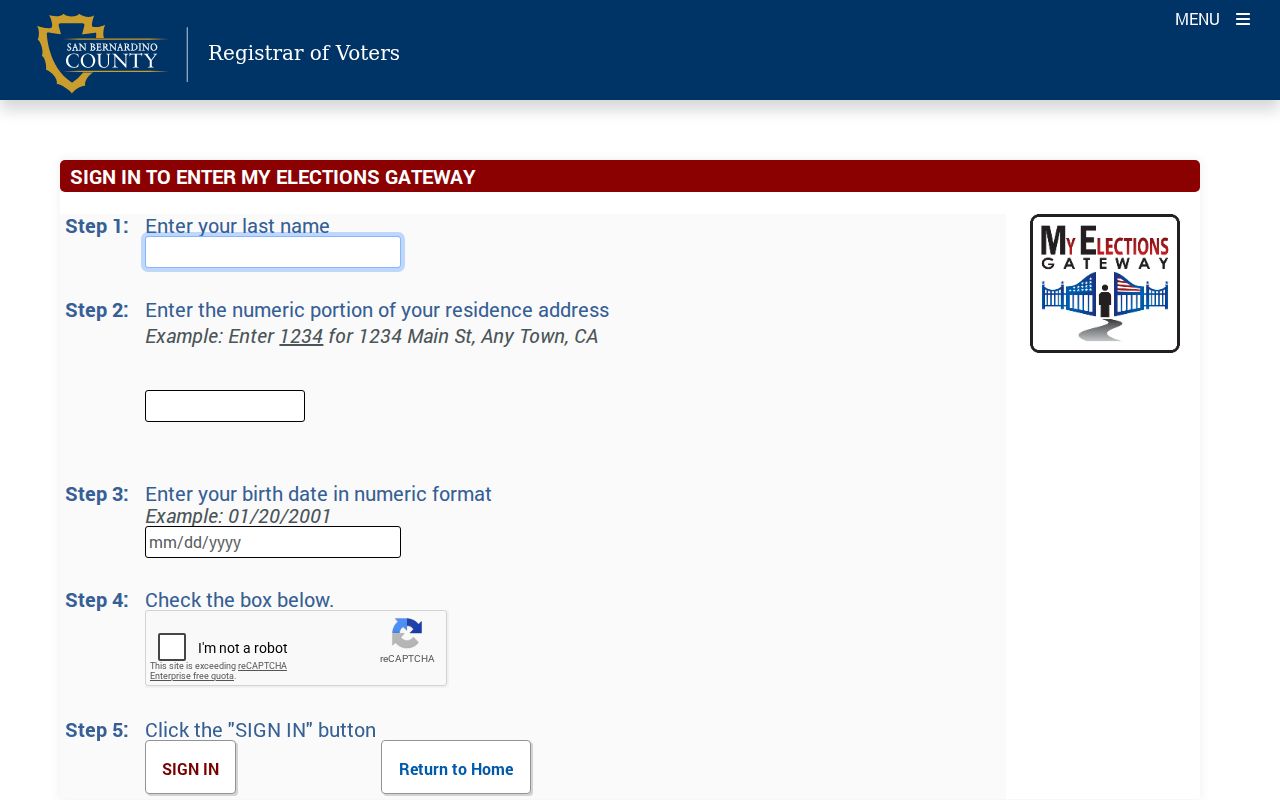 The linked image belongs to the official election source set and is not evidence of open street-level access.
Privacy Belongs in Loma Linda Research
Not every missing address is a research failure. Safe at Home can provide a substitute address and confidential voter registration for qualifying participants, and certain deed or ownership forms can receive protections. Adoption records, original birth records, confidential marriages, sealed court matters, and restricted voter fields follow their own rules. A protected record should not be reconstructed through a different source.
California's DROP platform gives residents a one-stop route for deletion requests to registered data brokers. It does not delete county originals such as deeds, court files, or public professional-license material. The California Privacy Rights Act likewise treats covered businesses differently from government custodians. If a result is wrong or linked to the wrong person, save the source and date and ask the responsible custodian or business for correction.
The State Controller unclaimed-property search is another example of a lead rather than proof. A name and city match may reflect a reporting business, not a present address.  Use it to identify a possible record, then verify through the responsible office.
A sound Loma Linda residents directory search ends with a documented source boundary. That discipline protects people and makes the result more useful.