
Loma Linda City Directory: Historical Shelf
The strongest local directory evidence sits in Loma Linda University collections, with county and federal sources filling the spaces between institutional volumes. The table separates a verified collection from a catalog lead and useful companions. No complete Polk city-directory run for Loma Linda was established in the research.
| Collection | Years | Where Held | Access |
|---|---|---|---|
| Loma Linda Sanitarium and Hospital telephone directories | 1924-1930 | LLU Heritage Research Center | Collection inventory; appointment and visitor policy |
| Loma Linda Citizen Directory by localities | 1929 | LLU Seventh-day Adventist Document File, Record ID 3013 | Catalog lead; inspect with the archive |
| LLU photographs, films, videos, and papers | Collection-specific | Heritage Research Center and LLU Digital Archive | Online objects where digitized; archivist help for holdings |
| Federal population census | 1790-1950 released | National Archives and library databases | Online research and library access; 1950 is newest public census |
| County Great Registers and lot books | 1866-1908; 1895-ca.1950 | San Bernardino County Historical Archives | Contact before travel; archive access was listed closed |
| Sanborn maps | Years not verified | Library, state, or university catalogs | Search by catalog; do not assume a Loma Linda run |
The San Bernardino County recorded-document index covers 1925-present and can bridge a directory clue to a recorded party. It is an index, not an image library or a substitute for the historical volume.
The inventory did not expose a scanned 1929 page, a complete Polk run, or a separate historical-society holdings page. Historical newspapers and obituaries are title-specific, so confirm a local newspaper run with its holding library. Treat the shelf as a collection-by-collection search, not a continuous annual series.
For a modern address clue from an older volume, the Loma Linda by-street directory handles the separate address-keyed trail. The historical volume shows how a name was recorded at one moment.
Inside Loma Linda's Institutional Directories
Loma Linda University’s Heritage Research Center is the central local stop for directory work. It holds health, Seventh-day Adventist, institutional, personal, and organizational collections at 11072 Anderson St.; the research contact is 909-558-4942. Outside researchers should follow the appointment and visitor policy. Ask whether a volume is available, served in a reading room, and subject to reproduction rules.
The published LLU archival collections inventory names “Loma Linda Sanitarium and Hospital Telephone Directories,” 1924-1930, along with photographs and papers. The collection may connect a surname to a department, extension, or institutional setting, but its inventory does not prove which fields appear on each page.
A local telephone directory can be more precise for the sanitarium or university community than a broad regional book, while still missing people outside the institution. Pair it with census households, land records, church material, and personal papers.
Institutional records often outperform City Hall for early Loma Linda residents. The settlement grew from the 1886 Mound City resort, the 1905 Adventist purchase, and medical and church institutions with their own paper trails. Loma Linda incorporated September 29, 1970, and became a charter city June 2, 1981. Earlier names and affiliations may sit in county or university custody.
The Heritage Research Center collection page is the best starting point for current access details and collection scope:

The image points to the archive that anchors Loma Linda city directory research, even when the needed volume is not available as a public scan.
Note: A collection title does not prove a complete run, public scan, or named person.
The 1929 Loma Linda Directory Lead
The LLU Seventh-day Adventist Document File adds a highly local lead. Its catalog identifies Record ID 3013 as “Loma Linda Citizen Directory by localities - 1929 - Keld J. Reynolds.” It is a collection lead, not an exposed scan. Publisher details, entry conventions, and household fields require archive inspection.
“By localities” should not become a claim about a complete reverse directory. Ask whether the item is arranged by neighborhood, institution, street, or another grouping, then record its order and abbreviation page. Keep the catalog wording and Record ID separate from the 1924-1930 telephone series.
The Seventh-day Adventist Document File search is the source for that catalog lead:
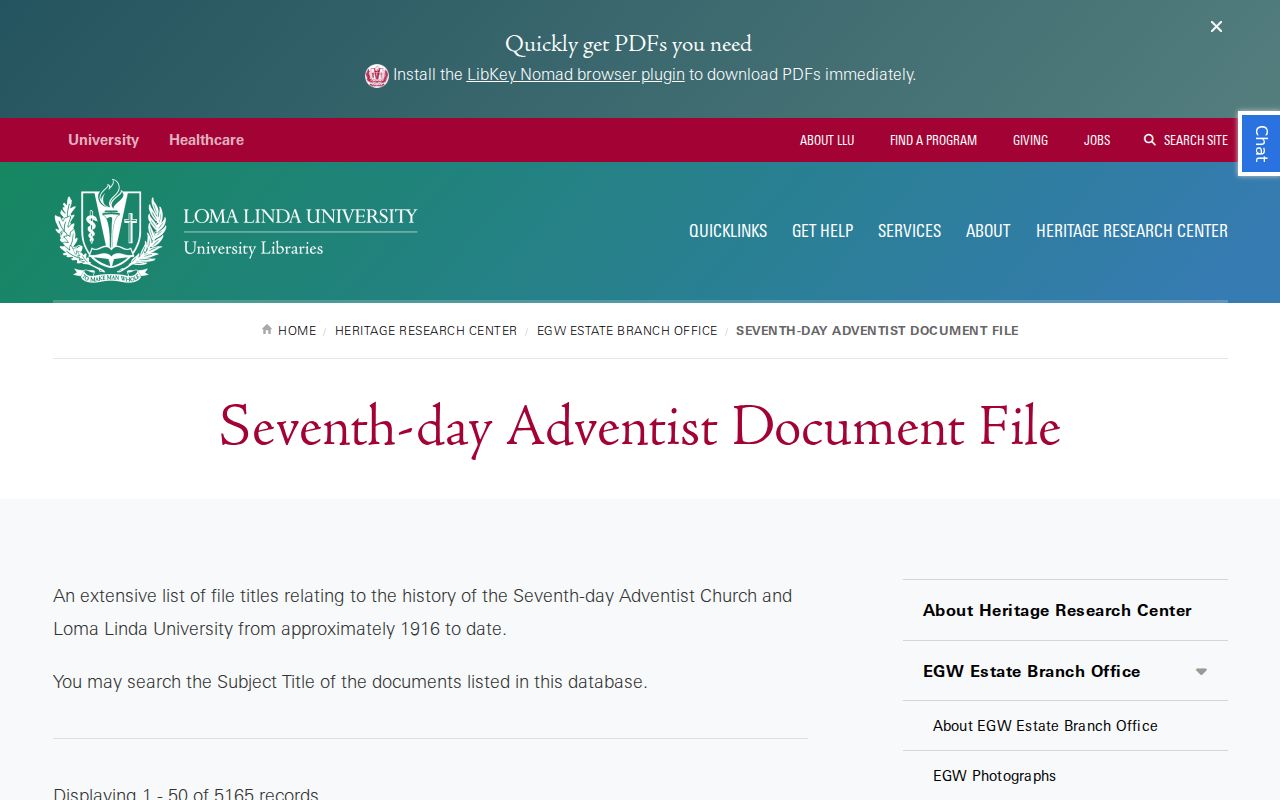
This view represents a finding aid and search result, not a scanned 1929 Loma Linda directory page.
Sanitarium menus dated 1913-1955 may retain a patient name and room number. This sensitive, archive-controlled material can answer a narrow question, but it is not a public patient list or a substitute for a directory entry.
Reading a Loma Linda City Directory
No public scan of an LLU telephone-directory page was available for a field-perfect sample. The table separates fields to verify locally from general city-directory decoding aid. It does not claim that LLU volumes contain every field.
| Local name line | Surname and given name, or a department, are possible leads to inspect; the exact LLU format remains unverified. |
|---|---|
| Telephone or extension | A local institutional volume may organize contact numbers, but the actual page and field order were not exposed. |
| Institutional location | Check whether a department, building, or other internal location is printed before interpreting a number. |
| Spouse in parentheses | General city-directory decoding aid only. Some standard entries place a spouse name in parentheses. |
| Occupation or employer | General decoding aid only. A standard directory may add an occupation or employer; do not assign this field to an LLU volume without inspection. |
| Address and business address | General decoding aid only. A printed home or business address can differ from an institutional contact location. |
| r, h, or wid | General shorthand may use r for resides, h for householder, and wid for widow; verify every mark in that volume. |
Read the page as a snapshot. A name may sit under a spouse, department, or institutional role, while an address may be a mailing point. An absent name may reflect a gap, an unlisted number, or changed affiliation.
Photograph or transcribe the exact volume’s abbreviation key first. Copy spelling, punctuation, address, number, and mark as printed. Do not modernize a street name or expand a mark from memory.
Loma Linda City Directory Terms
Older directories use compact labels that can look more certain than they are. Use these definitions as a start, while keeping the volume’s own key in charge.
- Criss-cross directory
- An address-order or street-order section that works backward from a place to a listed name. It exists only when the particular volume includes it.
- Householder index
- A name-based index aimed at household heads or principal entries. It may not include every person living at an address.
- Abbreviation key
- The volume-specific explanation of short marks and symbols. Copy it first because the same letters can mean different things in different runs.
- Collection-level description
- A catalog record that identifies a group of materials without exposing each page or confirming every field inside the group.
The 1929 Loma Linda catalog lead and the 1924-1930 telephone inventory remain collection-level evidence until an item is inspected. An archive lead is not proof that a named person appears on a page.
Note: Census households and directory entries can use different names, addresses, or dates for one person.
Tracing Loma Linda City Directory Households
A household trail starts with one known entry and moves across years without treating silence as proof. Record the title, date, page, arrangement, and abbreviation key, then pair it with a released census and a second local source.
- Start with the exact name, spouse, address, occupation, extension, or institution as printed. Note spelling variants before searching another year.
- Test the 1924-1930 telephone volumes and the separate 1929 citizen-directory lead as distinct collections. Do not merge their years or assume the same arrangement.
- Compare nearby directory years when the archive can supply them. If a reverse or criss-cross section exists, use it to check an address, then mark every gap.
- Pair a directory observation with a federal census year such as 1920, 1930, 1940, or 1950. Compare household members, age, birthplace, occupation, and address without expecting the two sources to match word for word.
- Close the trail with LLU photographs or papers, county deeds from the available index period, and title-specific obituary or probate research. Keep the source and capture date for each conclusion.
A directory records the compiler’s moment; a census records a scheduled household; a deed records transaction parties. None alone proves continuous residence. If a name disappears, consider a move, death, changed institution, or a gap in surviving pages.
The National Archives census research page explains the release framework used for the public census collection:
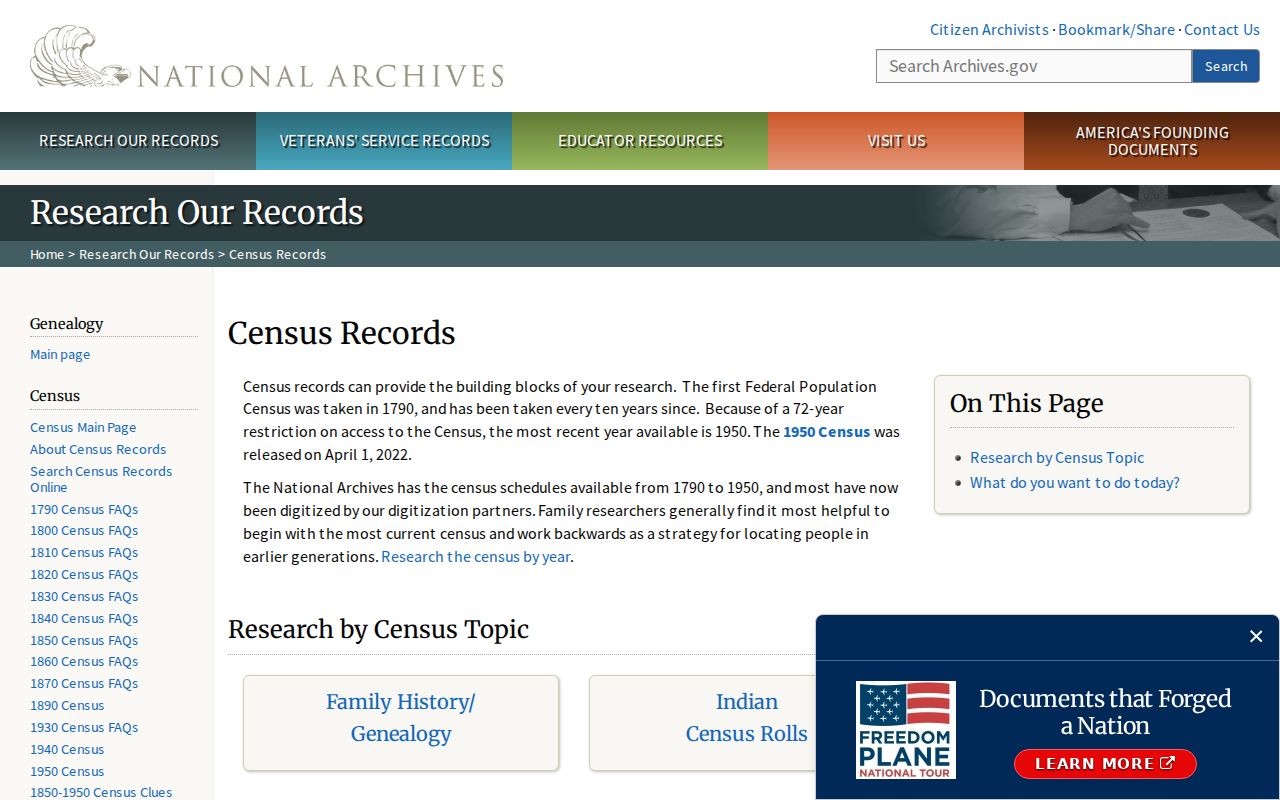
As of 2026, 1950 is the newest public census under the 72-year release rule, so later household questions need different records and careful limits.
When an old directory entry needs present-day confirmation, the Loma Linda resident lookup workflow can help compare independent records without turning a historical clue into a current household claim.
Loma Linda Directory Images and Papers
The LLU digital archive broadens a name search beyond printed city directories. Its description reports roughly 15,000 described photographs, more than 3,500 digitized items, and over 2,000 photographs concerning Loma Linda history, plus about 2,000 films and 1,000 videos. A caption, program, department file, or paper can provide context for a directory.
Use the LLU Digital Archive to test a surname, institution, building, class, or event. Match an object with the directory year, role, spouse, address, or another stable detail. Unprocessed or authorized collections may not appear in a blank catalog result.
The archive supplies context while the directory supplies a number or short entry. Do not stretch a caption beyond what it says.
The LLU Digital Archive collection shows the online side of that research layer:
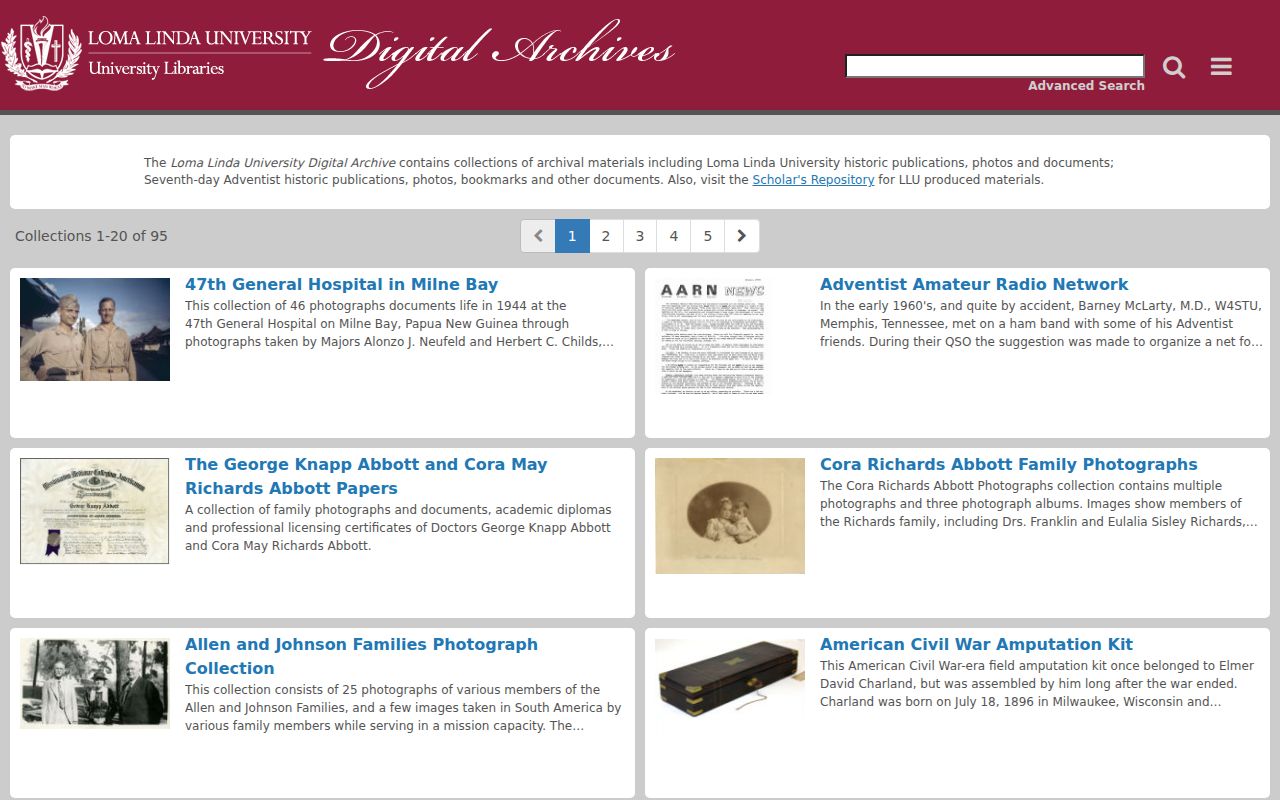
Digitized photographs and described media can help confirm a name or setting, while the archive staff remains the route for unprocessed or restricted collections.
Loma Linda's Directory Research Timeline
Loma Linda’s record history has several custody changes. The timeline helps choose a source without inventing a last printed year or assigning every early record to City Hall.
The San Bernardino County Historical Archives holds pre-digital material, including Great Registers and lot books that can add identity or property context:
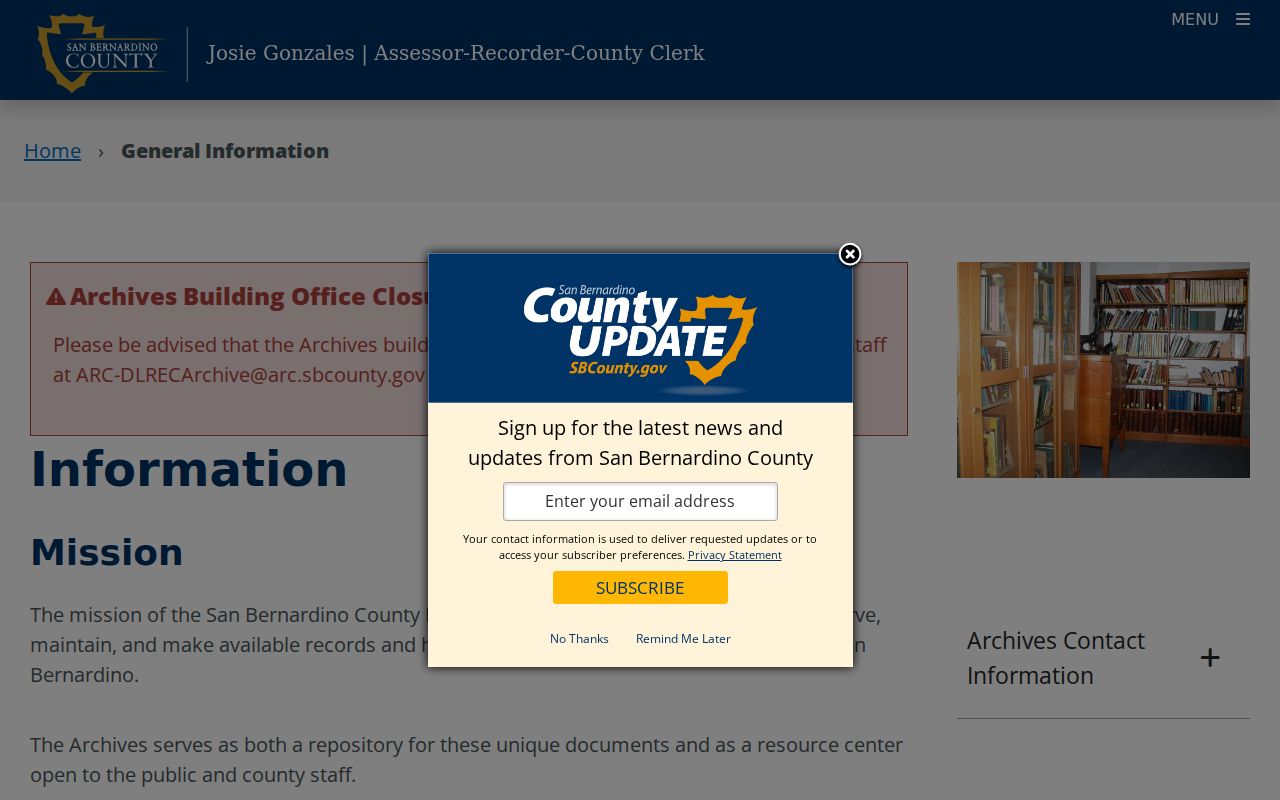
The archives building was listed closed during research. Email ARC-DLRecArchive@arc.sbcounty.gov or call 909-387-1001 before travel, and confirm whether the needed series can be served.
| Year or period | Research milestone |
|---|---|
| 1886 | Mound City resort development begins the local historical setting. |
| 1905 | Seventh-day Adventists purchase the resort, strengthening the institutional paper trail. |
| 1924-1930 | LLU inventory lists Loma Linda Sanitarium and Hospital telephone directories. |
| 1929 | Record ID 3013 identifies the Loma Linda Citizen Directory by localities lead. |
| 1950 | Newest public federal census as of 2026 under the 72-year release rule. |
| September 29, 1970 | Loma Linda incorporates; earlier municipal assumptions need county or institutional checks. |
| June 2, 1981 | Loma Linda becomes a charter city. |
| Last printed year | Not established. Do not invent an end date for a Polk or other city-directory run. |
Great Registers from 1866-1908 may add occupation, age, height, physical description, and naturalization information. Lot books from 1895 to about 1950 may list owner or taxpayer, legal description, improvements, and land or water values. These are companions, not directory pages. Sanborn sheet years and a local newspaper run were not verified.
For an item not exposed online, make a focused request to the named custodian with the person, institution, approximate year, title, and research question. That preserves the gap while giving staff enough detail to locate the right shelf.
Note: Confirm closure and reading-room access before relying on posted hours or planning a trip.