
Start a Loma Linda Residents Directory Search
Every Loma Linda residents directory search starts from whatever clue you already hold. A name sends you toward court filings, voter rolls, licenses, or archival lists. An address points to the county parcel roll and the city's GIS layer first. Older households often surface faster in a city directory, census schedule, or obituary. Those sources can beat any current index. Each record answers a different question. The best result is a trail of matching details, not a single lucky hit.
Property records describe an owner or a tax mailing address, and nothing more. Voter data follows registration. California limits public use of the voter file. The county's online gateway serves a person's own lookup. Court and vital records supply identity and relationship clues. Business filings show affiliation. A careful residents directory search keeps those roles distinct.
- Write down the known name, spelling variants, address, date range, institution, and reason for the search before opening a portal.
- Use ARC Parcel Access to connect an address or owner name to an APN and compare situs with mailing information.
- Use the APN, legal description, and party names to move into the recorder's index; it is not searchable by street address.
- Use CAP, vital-record procedures, business filings, licenses, or the county's voter channels only for the question each source is allowed to answer.
- For older people and places, pair the LLU collections and released census material with deeds, obituaries, probate, or a focused records request.
That sequence guards against a familiar mistake. A name on a deed, a case caption, or a filing is not proof of present residence. What links the sources together matters far more than how many results a search returns.
Loma Linda Residents Directory: Where Resident Records Live
Loma Linda is an incorporated city, yet its people records scatter across five custodians. The San Bernardino County Assessor-Recorder-Clerk ties parcels, recorded instruments, and vital certificates into one office. The Registrar of Voters runs a self-lookup. It restricts most voter products by purpose. City Hall keeps council and planning material rather than the deed roll. Case files sit with the Superior Court. Loma Linda University holds a historical record of its institutional community. It appears nowhere else.
San Bernardino County ARC
222 W. Hospitality Lane
San Bernardino, CA 92415
Assessor 909-387-8307
Recorder-Clerk 909-387-8306
San Bernardino Registrar of Voters
777 E. Rialto Avenue
San Bernardino, CA 92415-0770
909-387-8300
ARC's Hall of Records is the practical first stop for parcel, deed, certificate, and copy questions. The City Clerk routes council, ordinance, and planning-hearing requests. When a municipal record is not posted, a focused California Public Records Act request should name the department, the address or subject, and a date range. A custodian can search an existing record. It need not create a new resident list.
Loma Linda Residents Directory: Parcel Search Fields
The assessor portal is the main bridge from a Loma Linda address to a record trail. It handles whole-street queries as well as single parcels. Fields change with the chosen mode. A street directory approach never means filling everything in at once. Result tabs split current property data from roll history, parcel history, owner history, land, and residence characteristics.
| Search field | How it works |
|---|---|
| Parcel Number | Enter the APN in the parcel-number route. |
| Address | Use address autocomplete with street number and name. |
| Street Number | Numeric component for address searches. |
| Street Name Only | Useful for a whole-street pass. |
| City and State | Use Loma Linda and CA to narrow the place. |
| Zip Code | Supports a postal-area parcel filter, not a city-limit test. |
| First Name / Last Name | Owner-name utility with Active or Inactive name choices. |
| Formatted / Unformatted Name | Alternate name-index handling. |
Treat ARC's parcel data as an assessment tool, never a title opinion. Save the APN, legal-description fragments, and the date of access. That stable key then compares against the GIS polygon and narrows the recorder search.
Loma Linda Residents Directory: Current Resident Rolls
Several Loma Linda sources look directory-like at a glance. Each one records a different relationship. The table below keeps that difference visible. A name in an owner-derived field signals a property connection. A voter result belongs to the registered voter and the lawful access route. A court caption names a party to a proceeding, not necessarily a current resident.
| Source | What It Can Show | Keeper | Access |
|---|---|---|---|
| Parcel and assessment roll | APN, situs, mailing clue, values, characteristics | San Bernardino County ARC | Free web search and map |
| Recorded-document index | Grantor, grantee, document title and date | ARC Recorder | Free index; copy or office view |
| Voter self-lookup | Own registration status, districts, ballot tools | Registrar of Voters | Authenticated self-service |
| Court case search | Party role, case chronology, disposition clues | Superior Court CAP | Online metadata; limits apply |
| City and institutional directories | Officials, staff, historical contacts, affiliations | City Hall or LLU archives | Public pages or archive rules |
When a broad residents directory search narrows to one person, shift to the Loma Linda resident lookup workflow. It treats a property name, court party, business agent, and historical directory entry as leads. Each lead still needs independent support.
Loma Linda Residents Directory: The Recorder Trail
The San Bernardino County recorder index reaches from 1925 to the present. That span comes from its main public description. Its useful fields are document number, date, title, grantor, and grantee. A grantor transfers an interest; a grantee receives one. Deeds, deeds of trust, reconveyances, and liens can build a name-and-property trail. But the web index is not an image library.
ARC cannot locate ownership by street address. So start with the parcel number and owner-derived name from Parcel Access. Then search the party name. Narrow by recording date or title, and record the document number. Copies come through the county's established channels. The image limit matters here. An index hit may confirm that a document exists. It may not show the legal description, signatures, or full terms online.
For older research, keep the county's two official descriptions straight. The general index covers 1925 to the present. The property-research guide describes online or office chain work from 1958 forward. Pre-1958 microfilm is organized by decade. Ask ARC which route applies before promising a remote result for the 1925-1957 stretch.
Loma Linda Residents Directory: Court Names Need Context
The San Bernardino County Superior Court offers its Court Access Portal, or CAP, as a name-and-case tool rather than a residents directory. A Loma Linda resident lookup here starts with a party or business name. You can also search by case number, first, middle, and last name, case type, filing-date range, or calendar. Narrow the dates. Pick a case category too. Those two steps cut down false matches when a common name returns a crowded results list in the portal.
The San Bernardino Court Access Portal is the official starting point for the county case search. 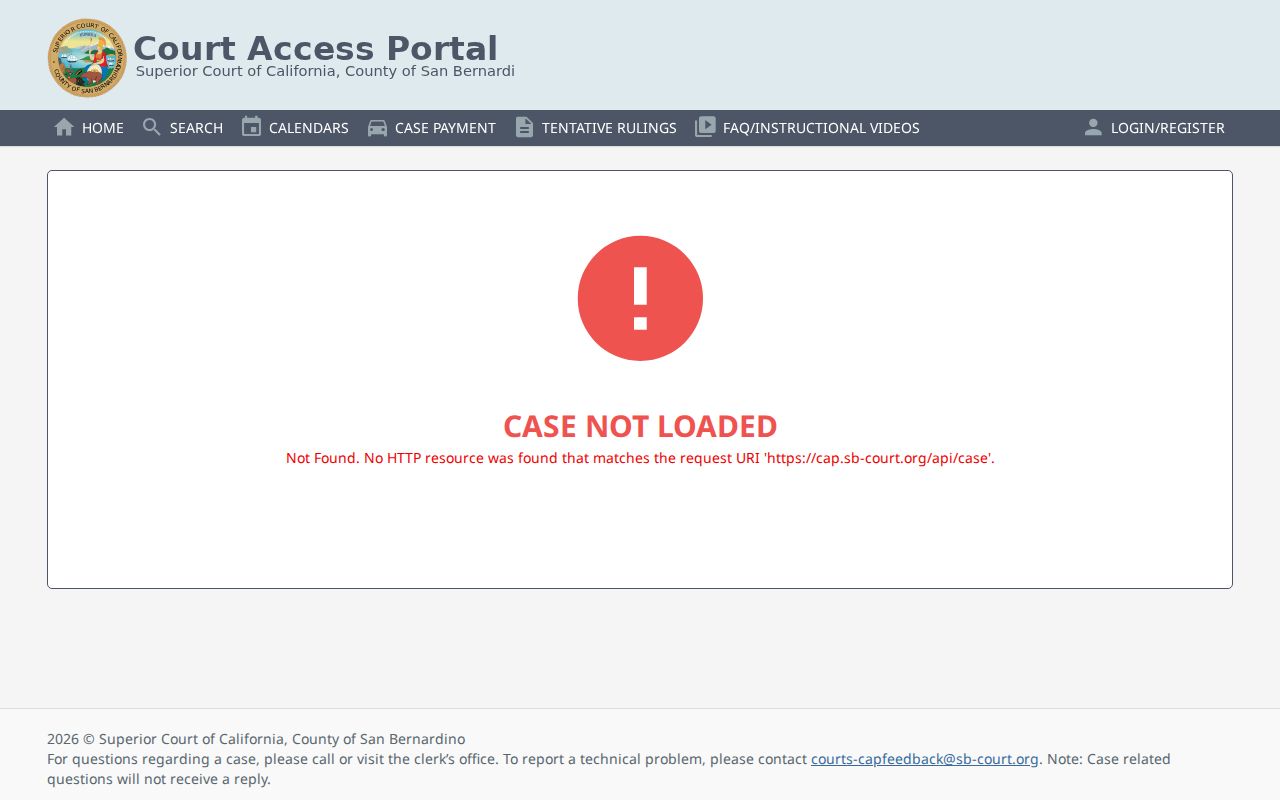 The linked capture places the court interface beside the fields and result limits described below.
| CAP result field | What to read |
|---|---|
| Case number and title | Stable placement and the named proceeding. |
| Filing date, type, and status | When the matter began and its current posture. |
| Party names and roles | Whether a person is plaintiff, defendant, petitioner, respondent, or another role. |
| Hearings and register of actions | Chronology, orders, and later events. |
| Document links | Availability and any copy or fee step. |
CAP itself cautions that records can be incomplete or carry conversion errors from older systems. Juvenile, adoption, sealed, confidential-family, and victim matters may be absent. Expunged cases drop out as well. Criminal and traffic files before 1998 are limited. One more caution matters. A complaint only states an allegation. A disposition or later order says something quite different about the person named. For an older file, contact the district clerk or Document Control, or send a written request. Off-site retrieval can take up to a week.
Loma Linda Residents Directory: Vital Events in Local Records
Birth, death, marriage, and divorce records run through their own specialized rules, not the standard public-record request path. In San Bernardino County, the ARC office handles births and deaths that occurred in the county along with marriages licensed there. For events outside the county, the California Department of Public Health Vital Records unit supplies statewide forms and the copy classes within its authority.
| Record | Custodian route | Key access point |
|---|---|---|
| Birth or death | ARC or CDPH-VR | Informational copy may differ from authorized copy |
| Public marriage | ARC for a known county license; CDPH statewide | Copy class and relationship matter |
| Confidential marriage | County that issued the license | Party or court order under Family Code §511 |
| Divorce | Superior Court file or decree | CDPH certificate is not the operative decree |
Fees matter here. The county's listed charges were $34 for a birth certificate, $26 for death, and $19 for marriage, plus a card surcharge and mailing costs dated July 1, 2026, so confirm current amounts before sending money. A mailed request from an authorized person requires notarization and a qualifying relationship or legal authority. Informational copies exist too. They carry a warning that they cannot establish identity. A genealogy index, obituary, cemetery entry, or church record can point you toward an event, but none of them is the certificate itself.
Loma Linda Residents Directory: Why the Voter Gateway Is Private
My Elections Gateway serves one purpose: a voter's own registration lookup. It asks for a first name when needed and a last name. It also wants the numeric part of the residence address, date of birth, a CAPTCHA, and the SIGN IN button. A successful sign-in can show registration status and districts. It also displays voting guides, polling or drop-off details, ballot status, election results, officials, and campaign-finance material. The gateway does not display voting history. California Elections Code §§2188 and 2194 restrict voter-file products to approved election, political, scholarly, journalistic, or governmental purposes. They also allow defined candidate and committee use. The county's signed application requests the applicant, organization, contact details, and residence or business address. It also asks for intended use and a wet signature. Products include county, district, or precinct lists. Party filters, selected election history, walking lists, labels, and custom reports or maps round out the options. Approval takes three to five business days. Delivery options cover office pickup, mail, thumb drive, and email/PDF. That is why a California voter roll cannot simply become an open Loma Linda street browser. A voter may request a certified copy of their own record with government photo ID. The county will not use that channel to reveal another person's confidential application.
Loma Linda Residents Directory: Historical Resident Directories
The closest historical directory lead sits at Loma Linda University. The Heritage Research Center's archival inventory lists Loma Linda Sanitarium and Hospital telephone directories. They cover 1924 through 1930. The same institution's Seventh-day Adventist Document File holds a 1929 record called a "Loma Linda Citizen Directory by localities." These are not ordinary phone-book clues. They capture a health-care, school, and church community. Its names may never appear under a conventional city heading. The university collection also contains photographs, papers, catalogs, newsletters, oral histories, and institutional records. The Heritage Research Center explains research access. Its digital archive offers described and digitized photographs plus other media. A printed directory year can pin a person, spouse, department, or address to one moment in time. It cannot prove a present household without a current custodian record.
The city-directory collections have their own full treatment on the Loma Linda city directory collections page.  This linked city-record view provides a current civic contrast to the older university shelf.
The 1924-1930 telephone run exists as a verified collection-level record. But the public inventory shows no scanned entry. The 1929 citizen-directory record is likewise a catalog lead without a public page image. Ask the archivist which items can be viewed. Ask also whether reproduction or an appointment is permitted. A collection description is not a promise about every household field. A standard directory entry typically shows a surname, given name or initial, a spouse in parentheses, occupation or employer, an address, and marks like "r" or "h." Treat that as a general decoding aid only. The abbreviation key from the exact year controls. Before identifying a person, pair the directory line with a census, a deed, an obituary, probate, or an institutional paper.
When an archival name needs a modern affiliation check, the California professional-license search is a separate official route. 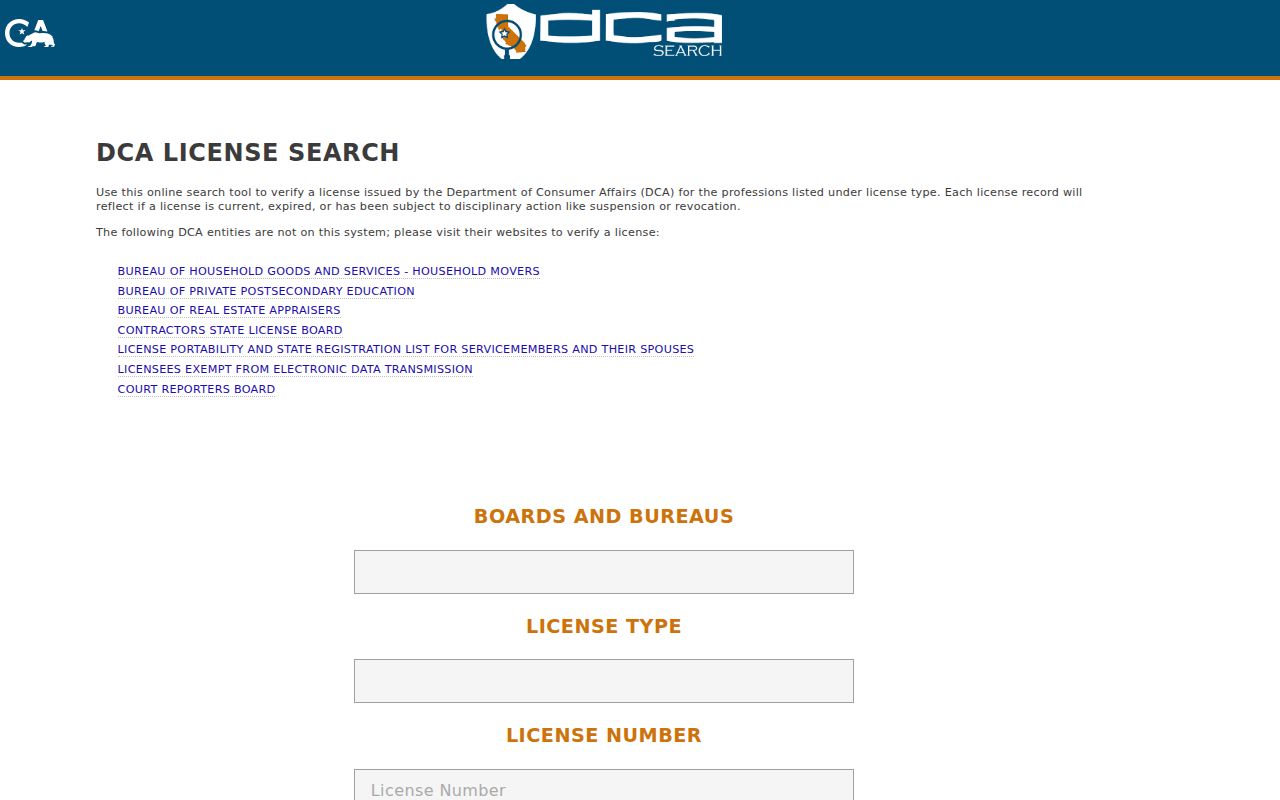 The source-linked image is not a scan of the 1929 volume; it is an adjacent official lookup reference.
Loma Linda Resident Records Follow the Institution
Loma Linda's paper trail follows its institutions. The story began as a resort. A Mound City resort opened here in 1886. The property later carried the Loma Linda health-resort name, passed to Adventist buyers in 1905, and incorporated as a city in 1970. Each shift moved the paperwork. A historical resident lookup can therefore wind through county records, sanitarium and medical-school material, church collections, and City Hall. The earliest directory-like source may be institutional rather than municipal.
The university archives hold board and department files, bulletins, catalogs, journals, personal papers, and photographs. Some groups stay unprocessed or need authorization. A missing catalog hit is not final proof. The name may still rest inside the archive. The County Historical Archives adds Great Registers from 1866 through 1908 and assessor lot or parcel books from 1895 to about 1950, rich with occupation, age, physical description, naturalization, owner, taxpayer, and legal-description clues.
Sanitarium menus from 1913 to 1955 may retain patient names and room numbers. Treat that material as archive-controlled context, never a public patient directory.
Trace a Loma Linda Household Across Years
Begin with one name and one year. Copy the spelling, spouse, occupation, department, and address exactly as printed. Then search the next available directory year. Note the gap rather than assuming a move. If the city directory offers a reverse or criss-cross section, test the address and the nearby names. Pair the directory date with a released census year, recorded documents, and an obituary or probate endpoint.
- Record the directory title, publisher or institution, year, page, and abbreviation key.
- Compare the address and household clues in adjacent directory years.
- Use the 1940 and 1950 federal census releases where the geography and household fit.
- For land, move from the APN and legal description into ARC deeds, preserving grantor and grantee roles.
- Use probate, obituary, cemetery, church, or LLU papers to test a final identity link.
Every directory captures a compilation moment. Students, new subdivisions, rural routes, people listed through a spouse, and short-term institutional contacts may all skip a given year.
Business and License Affiliations in Loma Linda
Some names surface through an organization, not a home. California's Secretary of State business search can show entity type, status, and jurisdiction. It also lists formation or registration date, addresses, agent for service, and Statements of Information. The DCA search adds license type, number, status, dates, address of record, and public discipline. A filing connects a person to a credential or entity. It does not prove residence at the listed address. Keeping that distinction clear prevents an office address from masquerading as a household.
For a university-connected name, compare the organization, department, and class year against an LLU catalog or archive item. Check the spouse and date too. Label business and professional addresses as such. That habit matters in Loma Linda. The medical, educational, and institutional community here creates many legitimate non-household address trails.
The California business search provides the filing route.  The linked image supports the affiliation route, not a claim about a private residence.
When an Old Loma Linda Address Needs a Custodian
Historical searches often stop at a source boundary. The online recorder index begins, by the county's own description, with 1925. The official property-research guide covers 1958-to-present chain work online or in the office, with pre-1958 microfilm organized by decade. Earlier lot and parcel books sit with the archives. The County Historical Archives reports closure periods. Email ARC-DLRecArchive@arc.sbcounty.gov or call 909-387-1001 before traveling.
Loma Linda city material follows a second route. The City Clerk holds council, ordinance, resolution, election, and public-hearing records. The city form asks for a specific record, address, and date range, then promises a ten-calendar-day determination with a possible fourteen-day extension and a typical two-to-four-week fulfillment estimate. Request an identifiable existing city record, not a staff-built household list.
The county public-records request page is a useful routing point for county material.  The source-linked capture shows the access channel, not an old directory page.
Loma Linda's Four Record Geographies
One Loma Linda address can sit on four different maps. The city boundary controls municipal jurisdiction. A ZIP code controls mail delivery. A neighborhood or institution map tracks civic life. The APN, tract, lot, and parcel polygon define the legal land unit. History adds a fifth layer: the pre-incorporation place name. Keep the maps separate. That stops a postal label or campus address from becoming a false residence claim.
Use the parcel map and APN for current land questions. Use USPS for delivery verification. The city boundary sets municipal scope, and LLU covers institutional history. A Loma Linda residents directory question gets sharper. Every record carries its own geography and date.
The county property source is the bridge for the modern parcel layer.  A parcel result can point backward, but it cannot replace a historical directory entry.
Official Records Versus Directory Leads
Official records have a custodian, a field set, and an access rule. Directory leads are looser. They add dates, institutions, and addresses, yet they can omit residents, lean on abbreviations, or preserve a compilation error. Treat a compiled hit as a prompt, not proof. Go inspect the source record. For family or estate work, write down the exact year and page so another researcher can repeat the path.
| Source class | Best use | Boundary |
|---|---|---|
| County parcel and deed records | Land, parties, legal descriptions, dates | Not every occupant or household member |
| Court and vital records | Events, relationships, case chronology | Eligibility, sealing, and copy rules |
| LLU and library collections | Historical people, institutions, photos, directories | Item access and coverage vary |
| Compiled directory category | Cross-source lead generation | May be stale, merged, or incomplete |
The official voter and records sources must also be used within their purpose rules. 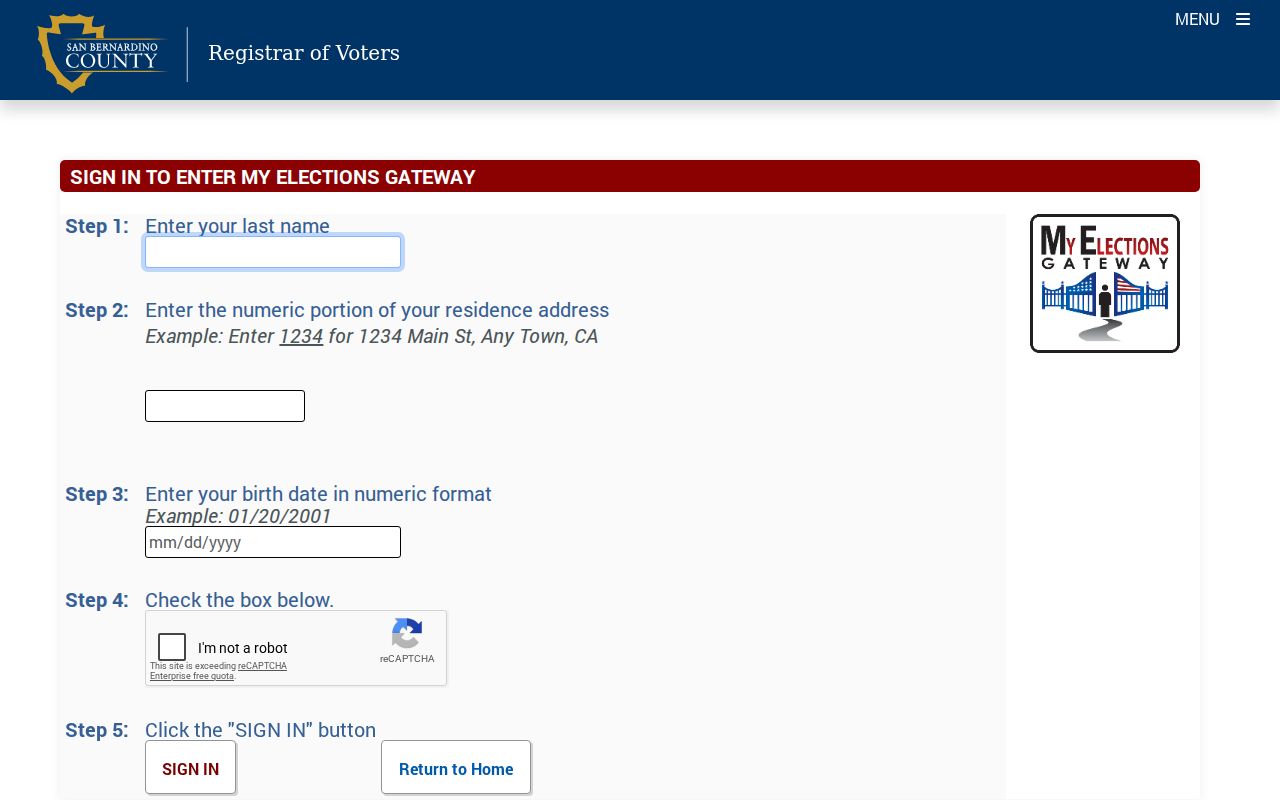 The linked image belongs to the official election source set and is not evidence of open street-level access.
Privacy Belongs in Loma Linda Research
A missing address is not always a failure. California's Safe at Home program gives qualifying participants a substitute address and confidential voter registration. Certain deed and ownership forms can receive similar protection. Adoption records, original birth records, confidential marriages, sealed court matters, and restricted voter rolls each follow their own rules. Never rebuild a protected record through a side door.
The state's DROP platform offers a one-stop deletion route for registered data brokers. It leaves county originals untouched. Deeds, court files, and public license records stay public. The California Privacy Rights Act treats covered businesses differently from government custodians. If a result is wrong or tied to the wrong person, save the source and date, then ask the responsible custodian or business for a correction.
The State Controller unclaimed-property search is another example of a lead rather than proof. A name and city match may reflect a reporting business, not a present address.  Use it to identify a possible record, then verify through the responsible office.
A sound Loma Linda residents directory search ends at a documented source boundary. That discipline protects people and makes every result more useful.